
The World
A Dark Fantasy World of Sorcery, Dragons and Demons
Explore the lore behind the Prophecy of the Kings — a realm haunted by ancient wars, vanishing sorcerers, and the ever-present threat of demons who snatch souls from the living.
Both this page and the FAQ describe everything you need to know about The Prophecy of the Kings series.
The Land of The Prophecy of the Kings
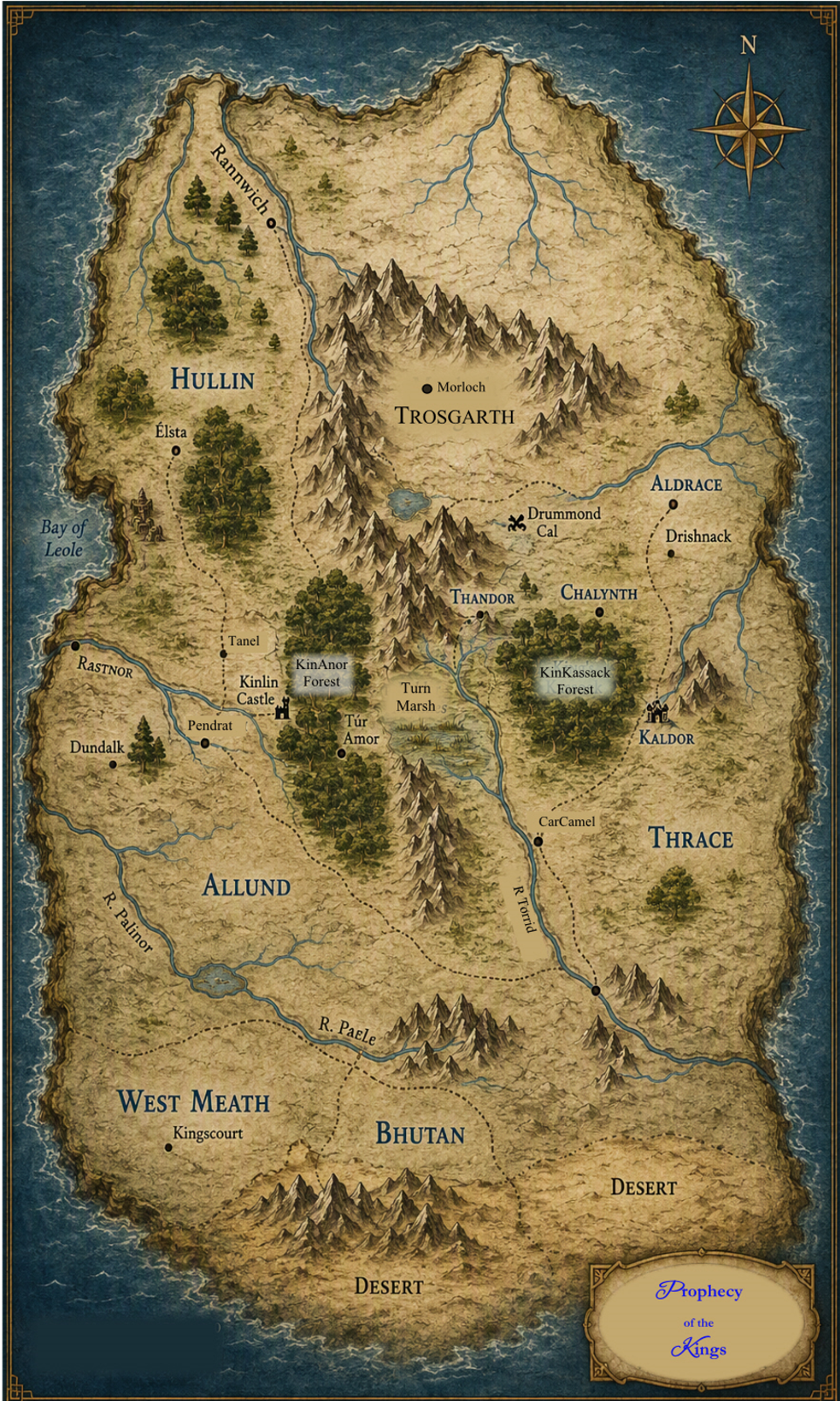
From the northern reaches of Hullin to the southern deserts, this is the land where the Prophecy unfolds — its rivers, cities, and ancient battlefields.
The Krell Wars
Long ago, the Krell Wars ravaged the land. Sorcerers on both sides wielded terrible power, summoning demons to fight their battles — creatures whose armoured hides no arrow could pierce, and who did not merely kill but tore souls from the living and the wounded alike. The demons could be called forth only briefly, and should a summoning fail, the summoner was dragged screaming into Hell. When the war finally ended, the sorcerers vanished without explanation, leaving behind only the crumbling ruins of a once-proud nation and a mystery that has never been solved. With their disappearance, the only known means of defeating demons was lost to the world.
The Prophecy
At the heart of the saga lies the Prophecy — a warning that Drachar's shade will rise again, and when that day comes, a demon horde will sweep across the land. Only sorcery can hold it back, yet the sorcerers have vanished and no one knows why. The people cling to denial, refusing to face the Prophecy, even as garlands and magical trinkets hang in window frames and doorways — frail, desperate charms against a darkness no one is prepared to face. As the signs multiply and fear spreads, the question becomes not whether the Prophecy will come to pass, but whether anyone can survive it.
The Kingdom of Allund
Allund is one of many lands in The Prophecy of the Kings, and it is where Kaplyn hails from.
Allund was one of the allies that helped to defeat Drachar and his armies in the Krell Wars. Other notable lands in the tale include Thrace, Hulland, Aldrace, West Meath and Trosgarth, among many others.
Its capital city is Dundalk. The tale of Legacy of the Eldric opens here, where Kaplyn, Lars, and Vastra are drawn together and the first stirrings of the Prophecy begin.
Dundalk
The capital city of Allund.
Dundalk is the capital city of Allund.
It is between Dundalk and Pendrat that Kaplyn finds Lars — a prisoner of outlaws in a wood.
Pendrat
A town with an annual fair.
Pendrat is a town in Allund that holds an annual fair.
Kaplyn and Lars meet Vastra, a self-professed sorcerer, in the town of Pendrat.
Shortly after the Pendrat Fair, the three stay at a farm where a possessed wolf attacks — the first sign that dark forces are stirring.
Tanel
A ruined Eldric city.
Tanel is an Eldric city, apparently abandoned and now a ruin.
Vastra conjures the true city from the ruins and persuades Kaplyn to find an ancient amulet, thrusting him into a nightmare journey. Kaplyn refuses to hand the amulet over, infuriating Vastra.
Here Kaplyn also discovers an Eldric sword — one of the nine that were forged, described in Drachar's Demons.
Kinlin Castle
Home of Kaplyn's friend, the Baron.
Kinlin Castle is owned by Kaplyn's friend, the Baron.
The three men travel here, and there is the first real sign of a demon. It attacks and kills the librarian as he was trying to decipher the Eldric script on the amulet.
Kinanor
A great forest where Lomar's people live.
Kinanor is a large forest where Lomar's people live.
The three men travel to the Kinanor forest, where they meet Lomar, an Alvalan.
Turn Marsh
The marsh between the forest and the mountains.
Between the Kinanor forest and the mountains lies the Turn Marsh.
The three men travel through the Turn Marsh on their way to Ban Kildor.
Ban Kildor
The mountain at the end of Legacy of the Eldric.
Ban Kildor is a mountain — the destination at the end of Legacy of the Eldric. At its heart lies a mysterious cave.
Deep in Ban Kildor the three find a fossilized tree. A power erupts in its heart and two buds appear and quickly crystallise. Kaplyn takes one and Vastra the other.
They flee, and near the exit Vastra shows his true colours and betrays them. A spell described on the amulet traps anyone but the Eldric from leaving and turns the three men to stone.
The Lore of the Prophecy of the Kings
Races
People of Trosgarth
A warring nation, long confined to its own lands.
Trosgarth is a warring nation. For centuries it fought and enslaved other nations.
The Eldric's arrival in the land changed the balance of power, and Trosgarth was confined to its own lands.
Its mood has festered ever since, the demand for conquest unfulfilled.
The Eldric
The Eldric are an ancient race of sorcerers, once guardians of the world, now vanished and feared.
An ancient and powerful people, the Eldric were once the guardians of sorcery and the only ones capable of standing against the demons. Drachar, an Eldric Lord, was cast out by his own kind and swore a terrible vengeance, forging an unholy pact with the demons that sparked the Krell Wars.
The Alvalah
A race of albinos who dwell deep in the Kinanor forest.
The Alvalah are a race of albinos, seldom seen beyond the bounds of their great forest. Lomar, who joins Kaplyn's company, is a prince of this people. He fears the Prophecy and believes he must travel with Kaplyn and the others if there is to be any hope of standing against the darkness.
Creatures
Demons
Ancient, soul-hungry entities.
Demons in this dark fantasy world are not mere monsters. They are ancient, intelligent, and malevolent entities that hunger for mortal souls. A demon does not simply end a life — it condemns its victim to a fate more dreadful than death, snatching the soul from the living body and dragging it into eternal torment.
They can be summoned by sorcerers, but the art is perilous and unforgiving. Even the bravest speak of demons in whispers, for a failed summoning means the demon turns upon its caller.
Since the sorcerers vanished, no one has possessed the knowledge to summon or banish them, leaving the land defenceless should the demon hordes ever rise again.
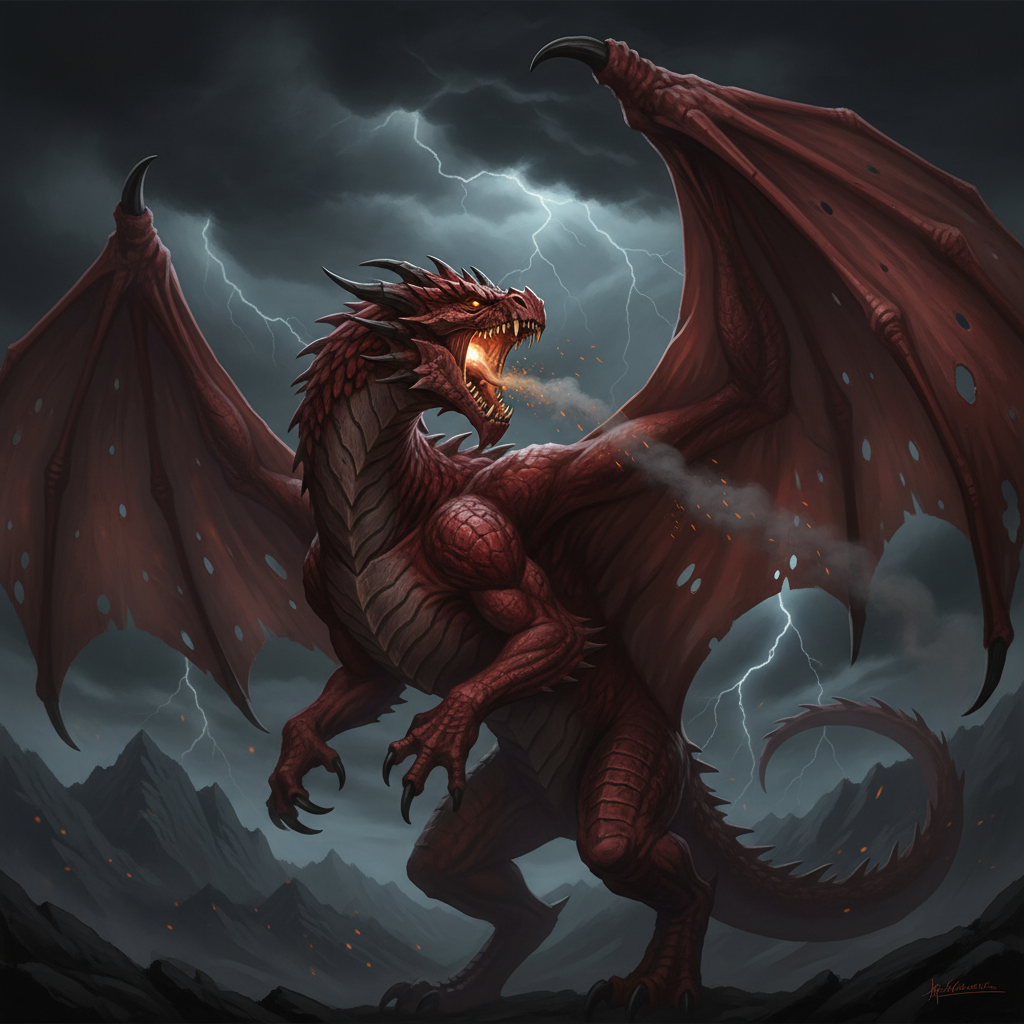
Dragons
Saviour or destroyer — the most mysterious of creatures.
Dragons are among the most powerful and mysterious creatures in the world — beings that can be both saviour and destroyer.
A dragon summoned by Kaplyn is hailed by the armies as their last hope against the demon tide, yet Kaplyn himself dreads the very creatures others trust to save them.
For years, dragons have stalked his dreams, and one name sharpens that terror into certainty: Shastlan, a dead emperor who brought ruin to his own world and whose darkness now reaches across the void.
Whether dragon or shade, guardian angel or evil incarnate, these ancient powers refuse to be ignored.
The Krell
Twisted servants of darkness, the krell are the demon-spawned warriors who march beneath the banner of Drachar's shade.
Tribes of krell were gathered and march to war alongside dark knights and grakyn. They are the foot soldiers of the demon tide, relentless and merciless on the battlefield.
Grakyn
Flying demon-spawn that serve as the enemy's scouts and hurl bolts of fire.
Grakyn are demon-spawn that can fly. Their dark skin reflects light like oil on water, giving them an unsettling, iridescent sheen. They possess some magical capabilities: besides acting as scouts for the enemy, they can also hurl bolts of fire. Alongside the tribes of krell and the dark knights, the grakyn march to war beneath the banner of Drachar's shade.
Magic
Sorcery
The Eldric art of drawing power from the spirit world.
Only the Eldric were sorcerers, and that magic is called Narlassar in the Eldric tongue.
Their power comes from the spirit world and is much more powerful than that of Wizards.
Lesser spirits such as elementals are typically used, but the more powerful Narlassar sorcerers gain power from the demon world.
Wizards
Those who hold magic within themselves.
Only the people of the land with the capacity to hold magic inside themselves can be wizards.
Wizardry is called Akrane in the Eldric tongue and is generally a weaker magic, as it is limited by the individual's capacity for magic.
Kara Stones
Stones that hold and enhance a wizard's power.
If a wizard can find a Kara Stone then his power is enhanced.
The Kara Stone can hold magic.
No one knows how Kara Stones are formed, although there are rumours that they may either be solidified magic that remains when a wizard dies or even the remains from a Kalanth.
Shaol — Guardian Spirits
Every person has a shaol, a guardian spirit — but some share a far stronger link.
A shaol is a guardian spirit, and every person has one. Some, however, share a far stronger link to their shaol than others. The Prieste of Ryoch become better warriors because their shaol communicates with them, warning them of danger. The strongest link of all allows a warrior and their shaol to communicate across an entire battlefield — a bond that turns the Prieste into near-unstoppable fighters, merciless on the field of war.
Gods
Kalanth
A demi-god, prayed to for protection.
A Kalanth is a demi-god.
The people are superstitious, likely in fear of demons, and pray to the Kalanth for protection.
There are holy sites where it is thought a Kalanth may exist, albeit in spirit form.
Ryoch
A new god, worshipped by the Priests of Ryoch.
Ryoch is a new god who appears early in the tale and is worshipped by the Priests of Ryoch.
It is rumoured that the Priests recruit children with an evil shaol, a guardian spirit.
The Priests seem to have omnipotent powers.
History
The Priests of Ryoch
A new faction seeking power over the very souls of men.
In Dragon Rider a new faction rises — the Prieste of Ryoch. They seek not merely power, but dominion over the very souls of men. The Prieste lure the young into their ranks and teach them to commune with their shaol, guardian spirits that can transform them into near-unstoppable warriors, merciless on the battlefield. While the kingdoms look outward for armies gathering beyond the horizon, the Prieste spread doubt and mistrust within, turning fear itself into a weapon.
Shastlan
A dead emperor who ruined his own world and now reaches across the void.
Shastlan is a dead emperor who brought ruin to his own world. For years, dragons have stalked Kaplyn's dreams, and one name sharpens that terror into certainty: Shastlan, whose darkness now reaches across the void toward Kaplyn's world. Whether Shastlan is a guardian angel or evil incarnate remains one of the deepest mysteries of the saga — and one of Kaplyn's greatest fears, for the very creatures the armies trust to save them are bound to the emperor he dreads.
Artifacts
The Nine Eldric Swords
Swords forged by the Eldric, weapons of the old sorcerers.
Nine swords were forged by the Eldric in the time of the Krell Wars, weapons of the old sorcerers who alone could stand against the demons. In the ruined Eldric city of Tanel, Kaplyn discovers one of the nine swords — a relic of a vanished age, and a sign that the power to resist the demon tide may not be wholly lost.
The Eldric Amulet
An Eldric relic that traps any but the Eldric within Ban Kildor.
The Eldric Amulet is an ancient relic Vastra covets, persuading Kaplyn to seek it out and thrusting him into a nightmare journey. A spell inscribed on the amulet traps anyone but the Eldric from leaving Ban Kildor — and when Vastra finally shows his true colours and betrays the company near the mountain's exit, that spell turns the three men to stone.
A Few of the Rules in the Prophecy of the Kings
In any fantasy tale, boundaries matter. Without them, magic becomes too convenient, danger loses its edge, and even the most powerful wizard can begin to feel limitless. One reviewer of The Prophecy of the Kings noticed that there was an easier way to end the story—an option I deliberately chose not to take. Instead, I followed a darker, more demanding path, one I hope makes the ending more interesting and more compelling. To keep that choice believable, I set clear limits on what certain characters, creatures, and powers could do. Here are some of the boundaries that shaped the world of the story.
The difference between a sorcerer and a wizard
In my books a sorcerer can be much more powerful than a wizard. Sorcerers access magic via the spirit world. At the lowest level this is summoning elementals such as air and fire. These are pretty harmless and are small sprites that can cast minor spells to cause fire, help to grow crops etc. More powerful spells are cast by demons. An imp is the smallest and least significant demon, but it can give a sorcerer access to its much more powerful cousins and then beware for if a summoning goes wrong then the summoner is dragged screaming to hell.
Wizards, by comparison, are a poorer breed of spellcaster—or so sorcerers like to claim. Their magic does not come from bargains with spirits or demons, but from a reservoir within themselves: a hidden well of power, finite and easily exhausted. Because of this, most wizards can cast only modest spells beside a sorcerer reckless enough to summon a demon. Yet there is one exception. A wizard who possesses a kara-stone is no ordinary rival. Such a stone can hold and magnify magic, allowing its bearer to draw upon far greater reserves than any unaided wizard could hope to command.
Cookies on this site
I use Google Analytics cookies to understand which pages readers enjoy and where visitors come from. Necessary cookies keep the site working and are always on. You can opt in to analytics below.